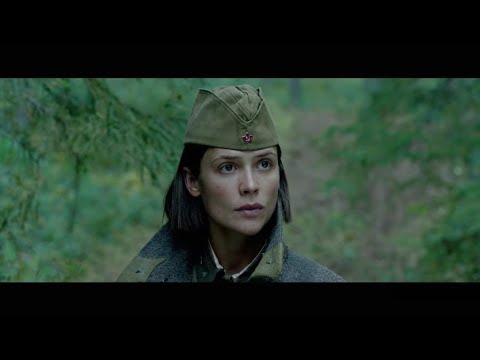


To all those who survived this horror and those in whose hands it will not be repeated again
They say war doesn't have a woman's face. They say that we women are not cut out for this. We are more useful when we give birth and raise children, when we cook dinner for our husbands or even get a good education, but not when we hold a gun in our hands.
They say we are more needed back home.
But where will we be needed if our home is taken away? If the Germans will take away everything we hold dear, what good would it do then if we didn't die?
We are human beings. Life has no meaning if we just exist like pigs growing up to be slaughtered. Like slaves who bow their heads obediently to their master and await their fate. I don't want to survive to live such a life. I would rather die here, fighting for my motherland as a loyal citizen of the Soviet Union.
I told my mother that, and she forgave me. I hope she has. And I hope she will forgive me if I don't come home.
Besides, it must be reassuring to her now that I am no longer here alone. Sasha, my fiance, is with me.
Apart from me, there are seven other women in our partisan unit. I can't say it helps me. No, it doesn't bother me, I just don't care. I don't think any of us feel like women anymore.
I admire each of them if I think about what was expected of us, but as time goes on, such thoughts arise in my mind less and less frequently. I no longer see the difference. Every day I am less a woman and more a soldier. Here, in war, the boundaries are blurred and you forget what it means to be a man or a woman.
And yet, there is a funny thing. The war has made us rougher, made our skin thicker, but our male comrades still try to look after us as best they can.
I don't need custody, but I understand why they do it. They just cannot act otherwise. After all, they are here for us. Women, children, old people: we are the homeland they defend, for which they shed their own and the enemy's blood. They took up arms so we wouldn't have to. That's why it pains them to see that we are here after all.
They feel guilty for letting the enemy to go this far.
"This is wrong", said our commissioner once. Once again, he spoke out loud the thoughts of many. "You girls shouldn't be here..."
But is anything in this war right? Does anyone, anyone at all, have to die here?
I am here because I have to be. I am a woman, but this is my country, my homeland, my people.
War is wrong in and of itself. Neither women nor men should die here. Not me, not the commissioner, not Sasha. I firmly know this. But Fritz left us no choice. Hiding at home under a blanket won't save us. Fighting is the only way to get our chance for a future life
Some will come home, some won't. The main thing is to have a place to return to.
We are in camp seventeen versts from the village of Veretenino, in a dense forest. October nights are cold and there is no way to spend the night in a glade, so we finished building the dugout a week ago.
First we dug a pit in the ground and lined it with logs from the inside. Then we put a wooden frame of supports and slabs on top and masked it with natural materials.
We made a table, stools and bunks out of planks. There is only hay instead of mattresses and blankets, but a firewood stove for warmth.
Inside our dugout looks like an ordinary hut, but outside it is a mound of grass. We need this disguise because the Nazis use aircraft to detect partisan units.

YOU ARE READING
Kirchner's Tree
Historical FictionWorld War II, Nazi-occupied Russia. A partisan girl Yaroslava takes refuge in a village when the germans come to carry out the punitive operation "Eisbär". Yaroslava survives, but the Wehrmacht officer who saved her life wants information from her...
